
WordPress 7.0 dropped on May 20, 2026, named after jazz great Louis Armstrong. The name fits, actually. Jazz is about improvisation, structure, and occasionally surprising your audience by doing something completely different from what was on the setlist. WordPress 7.0 did exactly that.
The release was originally supposed to land on April 9 at WordCamp Asia, which would have made for a tidy story. The core team pushed it back about six weeks to sort out some architectural work. Given that this is being called the biggest structural update since the block editor arrived in 2018, the extra time was probably worth it.
The AI Layer Nobody Was Talking About (But Should Have Been)
The headline going into launch was real-time collaboration. People were excited. They were writing preview pieces. And then, on May 8, the team quietly announced that real-time collaboration was being pulled from the release entirely, with no realistic timeline before 2027.
So what actually shipped? The thing that might end up mattering more in the long run: a native AI foundation built right into WordPress core.
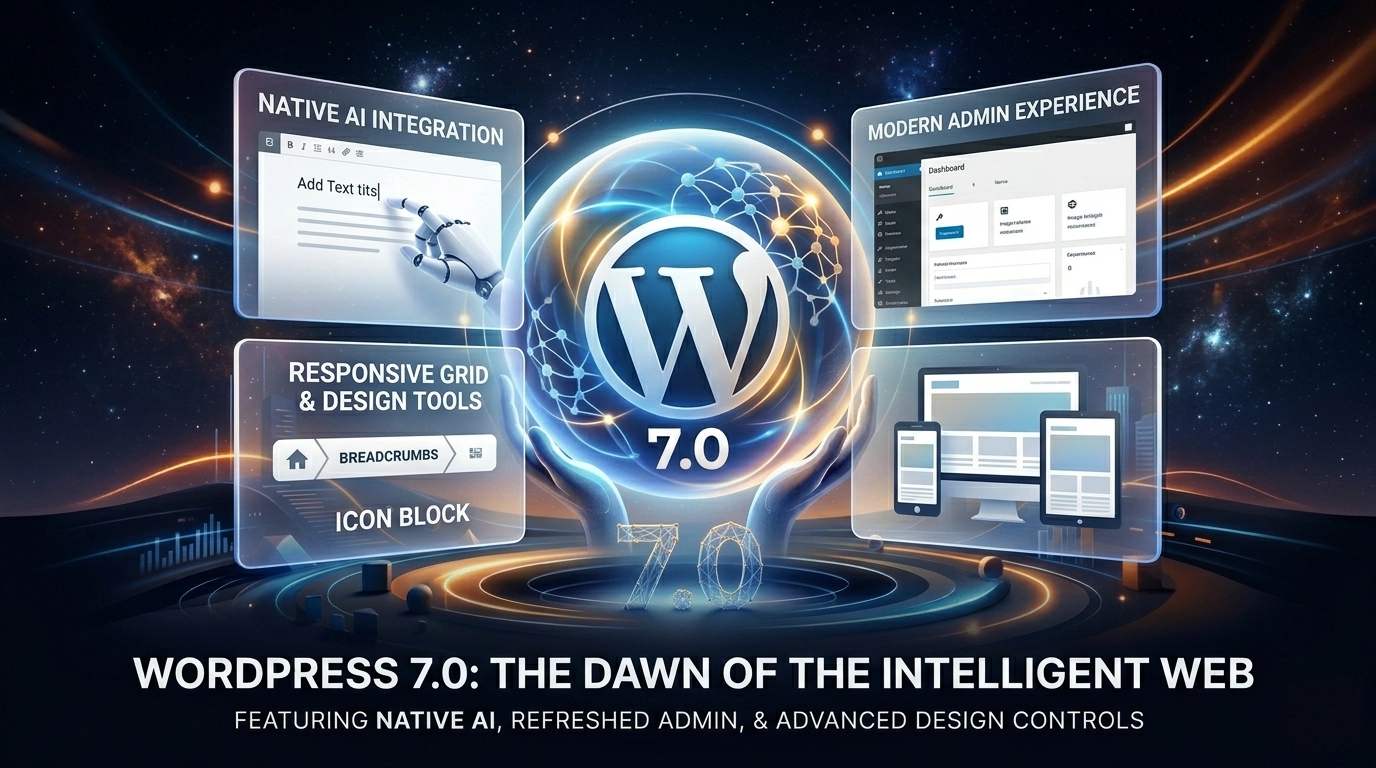
WordPress 7.0 introduces the WP AI Client and an Abilities API. In plain terms, this is a standardized layer that lets plugins and themes connect to external AI providers like OpenAI, Google Gemini, or Anthropic Claude without each plugin having to build its own messy integration from scratch. The API is provider-agnostic, meaning WordPress core is not picking sides. It just builds the plumbing and lets others bring the water.
It also ships a Client Side Abilities API, which lets developers register browser-side capabilities that AI tools can recognize and actually use. Think of it as WordPress telling AI assistants, “here is what this site can do, please act accordingly.” Whether AI assistants will actually listen is a separate matter.
The Admin Got a Makeover (For the First Time Since 2013)
The WordPress admin dashboard looked the same for about thirteen years. That streak is over. WordPress 7.0 ships a rebuilt admin interface powered by a React-based system called DataViews. It is the first major visual overhaul since 2013, which means a lot of people are going to spend the first week clicking in the wrong places out of muscle memory.
It is genuinely more modern, though. The kind of update where you forget almost immediately that the old version ever existed.
What Else Shipped
The release merges Gutenberg plugin versions 22.0 through 22.6 into core, which means a pile of editing improvements, new blocks, and design tool updates that have been sitting in the plugin for months.
On the collaboration side, even though real-time co-editing did not make it, WordPress 7.0 does include a working sync foundation using HTTP polling, with hooks for hosts to add WebSocket support later. Offline edits sync when you reconnect. The Notes feature got real-time syncing and a new keyboard shortcut for inline comments. Not the full collaboration story everyone wanted, but a genuine step toward it.
For developers, PHP-only block registration with auto-generated inspector controls is a welcome addition. It cuts down on the amount of JavaScript you need to ship a functional block, which anyone who has wrestled with block development will appreciate.
Who Actually Built This Thing
The release credits more than 875 contributors, including over 200 people contributing to WordPress core for the first time. More than 420 enhancements and fixes went in, across 70-plus fully translated locales, with compatibility testing from more than 21 web hosts. That is a lot of people arguing in pull requests so that your blog can have a slightly better toolbar.
Should You Upgrade?
The release is live now. The usual advice applies: test on a staging site first, make sure your plugins and themes are confirmed compatible, and do not update production on a Friday afternoon unless you enjoy spending weekends debugging.
The AI features will not change much about your day-to-day until plugin developers start building on top of them. The admin redesign is the most immediately visible change. And real-time collaboration is, at this point, a 2027 problem.
WordPress 7.0 is a release that laid a lot of groundwork quietly while everyone was looking at the feature that got cut. That is a very jazz thing to do.